Jun 20, 2025
Is the Energy Performance Certificate (EPC) mandatory for selling or renting a home?
Everything you need to know about the PEB certificate: definition, obligations, cost, validity period, penalties, and areas for improvement.
Legislation
Definition
What is the PEB?
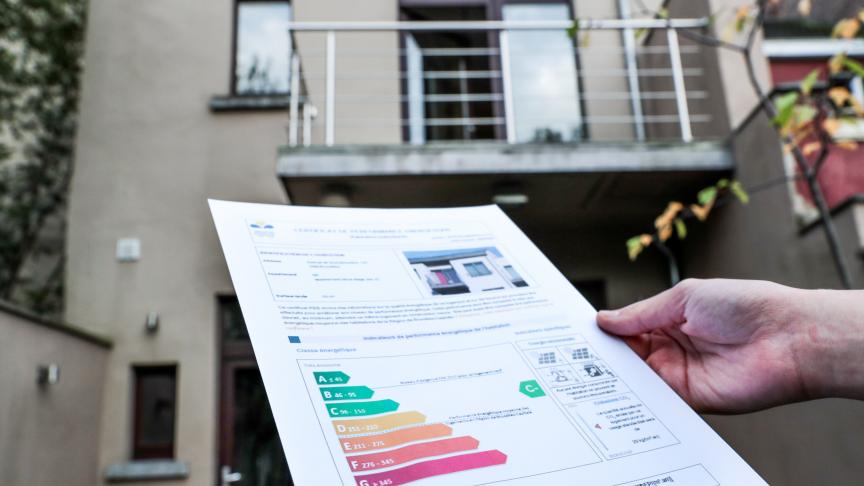
The EPC stands for Energy Performance Certificate. The EPC expresses the energy performance of buildings through several indicators (energy class, primary energy consumption, renewable energy, CO2...) and contains improvement recommendations.
This is a true energy identity card of a building or a residence, with a classification ranging from very economical consumption (score A) to very energy-intensive (score G).
Obligations
Is the PEB mandatory, and for which properties?
The EPC is mandatory for the sale or rental of a property. The requirements vary by region.
In Wallonia, the EPC only applies to residential buildings. In Brussels, it applies to homes with a usable area greater than 18 m², as well as commercial spaces over 500 m². In Flanders, it applies to all residential buildings, as well as offices and schools.
The EPC must be carried out by a certified professional to be compliant.

Cost & advice
Price, validity, sanctions, and ways to improve its EPC
The price of the EPC varies depending on the year of construction and the surface area of the property. Generally, you should budget for an average range between 150 and 500 €. The certificate must be renewed every 10 years.
In case of absence of an EPC, the penalties vary by region: in Wallonia, a fine of 1,000 € may apply in the absence of a valid certificate during sale or rental, and administrative flat-rate fines of 500 € may be imposed for non-compliance with publicity obligations or non-transmission of the certificate. In Brussels, non-compliance can lead to prosecutions with 8 days to 2 years in prison and a fine of 50 € to 100,000 € depending on the severity. In Flanders, a fine of 500 to 5,000 € may be imposed.
To improve its EPC, it is recommended to consider insulation work (roof, façade, floors, walls, glazing), replacement of the boiler if it is over 15 years old or in the case of oil heating, and temperature control solutions such as smart thermostats, thermostatic valves or a ventilation system.




FAQ